
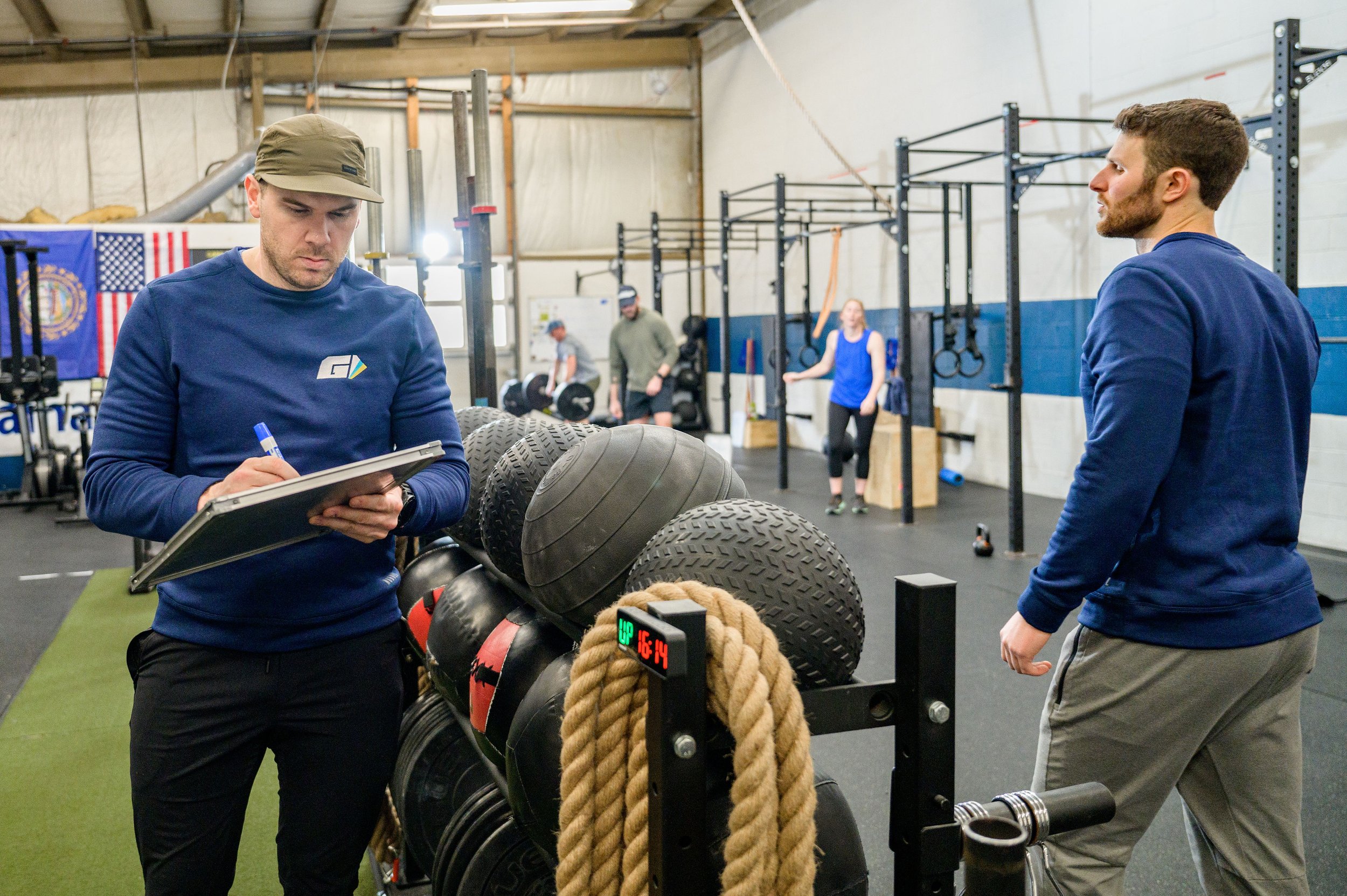
Welcome to the GAIN Blog
The blog is updated Monday-Friday. Tune in for posts and discussion about health, fitness, nutrition, training experiments and reflection. We share articles, videos and more. We post the link to our Instagram story every day, make sure to follow along there to never miss a post.
Squeeze
Someone asked me how to get better at opening jars. I said, all the grip training you’re doing must be helping with that. She of course asked, well what am I doing for my grip?
Grip strength is a side benefit of many exercises in the gym. In fact, grip strength is a good predictor of total body strength. Carry variations, deadlifts, hanging/pull ups, inverted rows, dumbbell rows, gorilla rows, rope climbs, sled drags and the first several that came to mind. It’s important to note, and this is what our jar opening discussion led to, you have to squeeze what your holding.
When you grip the bar firmly, say during a bench press, not only are you getting benefits of improving grip and forearm strength, you’re actually turning on more muscles throughout your arms and shoulders. Getting all the muscles to fire will help you maintain good form and get more bang for your buck in training.
In summary, if you’re holding something in the gym, be sure to squeeze it, hard, like you’re trying to melt an ice cube in your hand.
Justin Miner
@portsmouthcoach

Ask the Dietitian
On Thursday evening, at 7pm, Briana is coming to the gym to do a Q&A about all things healthy eating.
If you’ve come and chat with her before, it might be a nice reminder of things as you start dialing it back in for the fall. If you’re overwhelmed and aren’t even sure what protein is, this is for you.
Hope you can make it!
Justin Miner
@portsmouthcoach
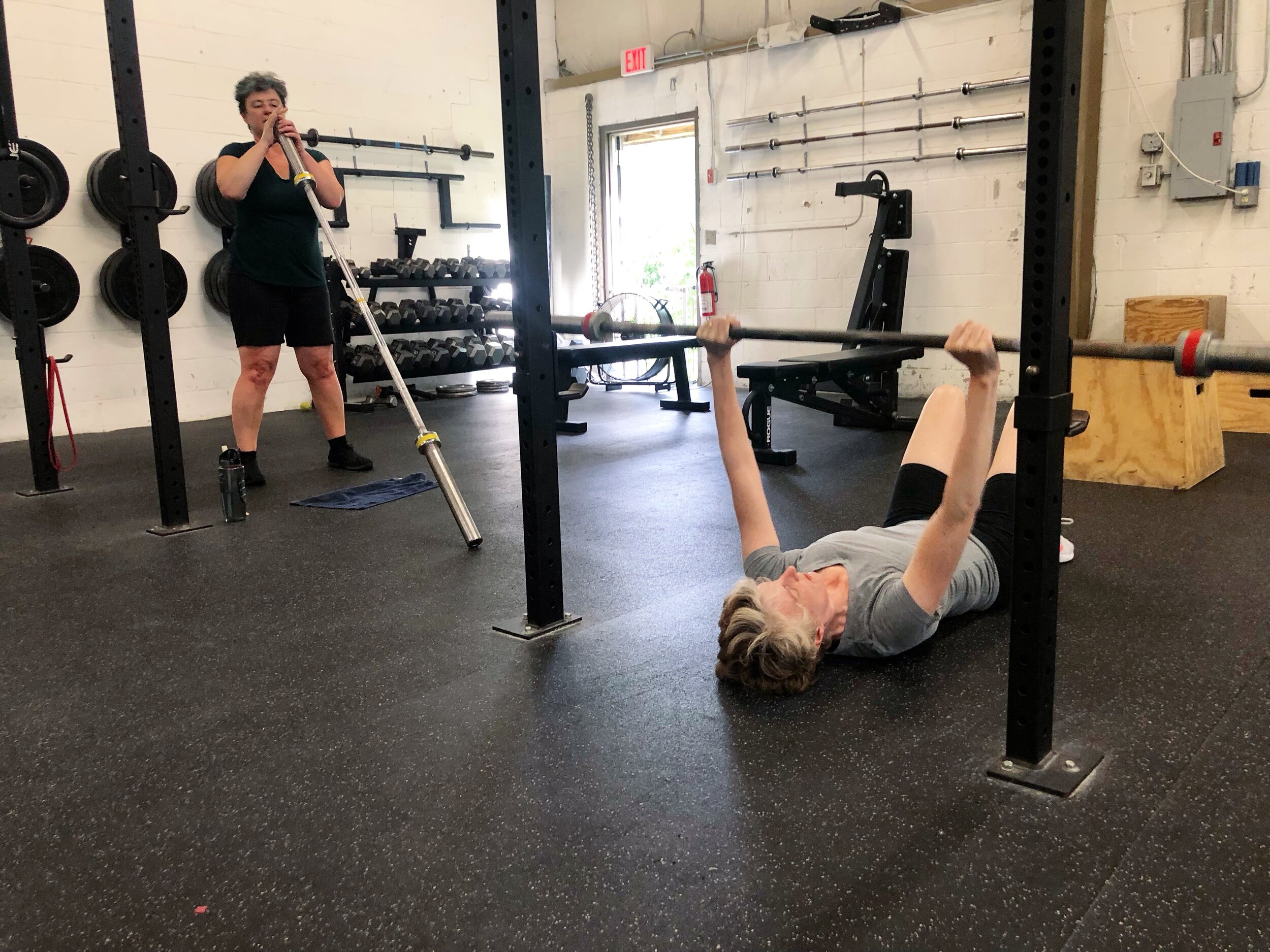
Deep Nutrition
In the past month, more people than ever has asked me about collagen, how to get more and if it really does all the things it says. To be honest, I’m a supplement skeptic. Everyone asks, if I take it, will I feel better? No, probably not, and it’s important to note that’s not what supplements are anyway. They’re to supplement what you’re currently eating and taking in for nutrients, I doubt that any of us will notice a drastic effect from adding in collagen or protein powder or BCAAs or what have you. Cumulatively, with other positive lifestyle changes, like more sleep, better hydration, managed stress and frequent training will handle most of that load. We can use supplements to bring up a deficiency or to get more of something that we don’t often get. That’s where collagen comes into play.
In the great book, Deep Nutrition, Dr. Catherine Shanahan goes over her Four Pilars of Health. She uses these principles of healthy eating for humans, not by forcing this restricting diet over this one or that one. These principles can be added into any current diet of someone looking for health benefits without the dogmatic, in-your-face style we’re used to with diet books.
First, what is collagen anyway?
“Collagens are extra-cellular proteins that give skin its ability to move, stretch and rebound into shape…Collagens aren’t just in skin; they’re everywhere, imparting strength to all your tissues… [they] hold our outermost layer of skin together, unite adjacent cells in all your glands and organs, they’re in the bones, heart valves, brains, liver and lungs. Bundles of collagen form extended strips and sheets in sturdier tissues like ligaments and tissues that surround your joints and hold your skeleton together.”
Deep Nutrition, pg. 306-207
One of her principles is to eat meat off the bone. This way, without remembering to make a smoothie with collagen power in the morning, or take a daily pill, you can get a hearty dose every now and then. Shanahan recommends making soup with bones or drinking bone broth to get all the collagen building nutrients.
Before you reach for the latest and greatest supplement, try a slight modification in your diet. Cook some cuts of meat with bones to get some tendons and ligaments, order the bone marrow for an appetizer and make a hearty soup with some bone broth.
Justin Miner
@portsmouthcoach

Halfway Habits
Yesterday marked the halfway point of our September Habit Challenge! I often talk about perfectionism slowing us down or stopping us all together. I was quite proud of my 13 day push up streak I had going. Ironically, the first day I went to the gym in September, I forgot to do my push ups.
It didn’t occur to me until the next morning when Hannah asked if I had done them the night before. Totally forgot, didn’t even cross my mind once all day. Come Sunday, I was unmotivated for my daily total. Once I got around to them after dinner, they were hard, it felt like I was back on day one.
The important thing is that I didn’t miss twice in a row. Streaks are motivating. However, if you miss your streak, the productive thing to do is forget about and build another. Don’t quit for one mishap, it’s no big deal.
Justin Miner
@portsmouthcoach

Daily Check In
I’ve found a nice side benefit of my daily push ups. Since I’m doing them every day, same amount of reps and not within a typical workout structure, I get a daily check in as to how my body is feeling. Some days I bang them out and feel pretty good, a couple times, I got a big rush of energy doing them, or yesterday after spending the day hunched over traveling, they showed me how stiff my body was.
After finishing my push ups when we got home, I knew I needed to spend a little time moving around and stretching out. Pretty obvious after a long travel day, but without the check in, I might not have taken action on doing something about it.
You might have a daily check in routine already without even knowing it. Maybe it’s foam rolling, seeing how your body responds to the pressure and if it feels like it normally does. It could be hanging out in a squat, or doing a daily mobility drill like a deep lunge, box hip opener or couch stretch. It might be a combination of all those depending on the day.
What’s important, is that you develop a way to check in with your body and see how it’s doing each day.
Justin Miner
@portsmouthcoach
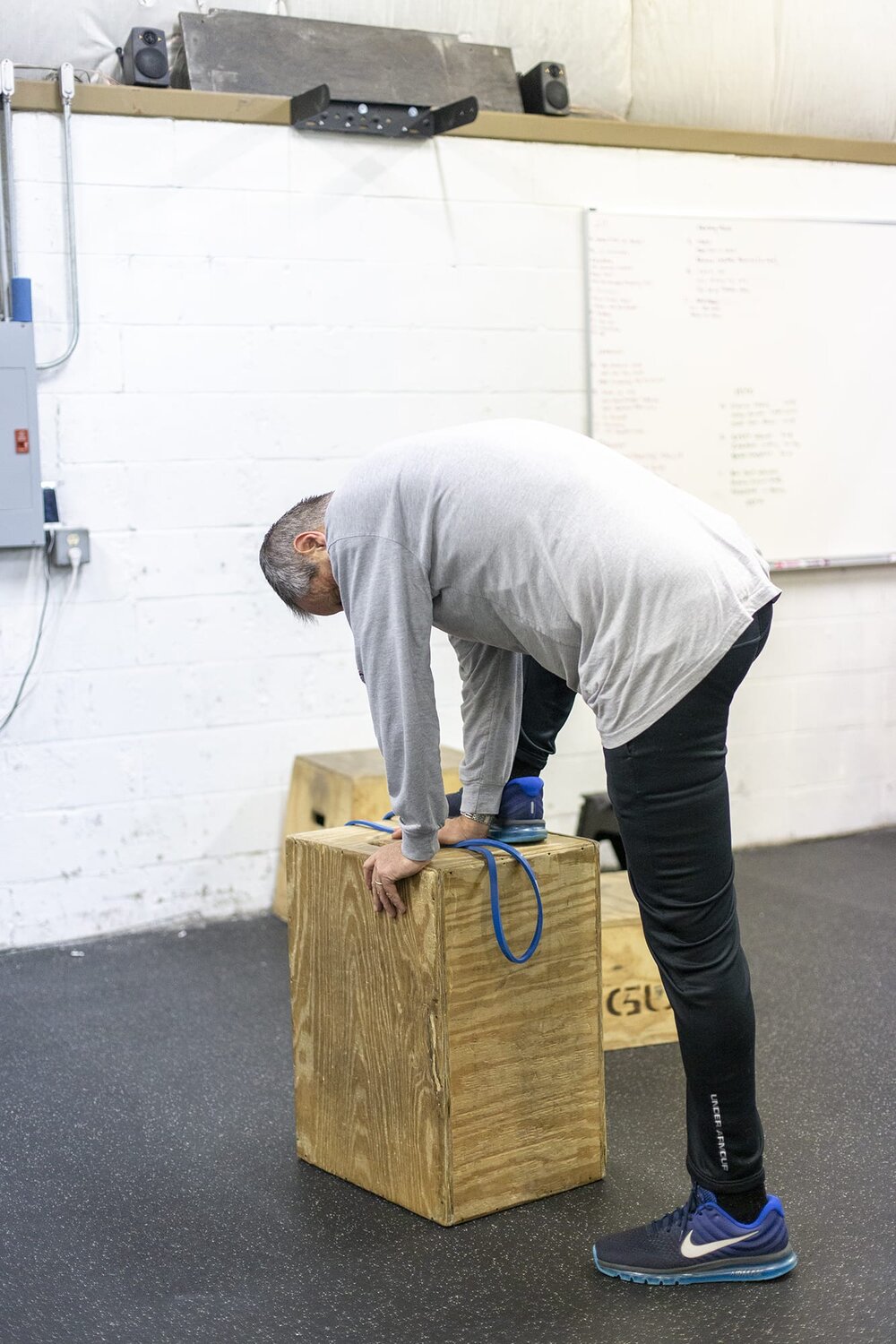
Airplanes
Airplanes are one of the noticeable areas where you can see the benefits of training. Fitness people, myself included, claim that improving shoulder mobility will help with overhead bins. It’s a bit of a cliche thing to say, but i’s so obvious when you see people trying to lift their suitcases into the overhead bins. There’s also quite a bit of strength required, especially if you’re an overpacker.
I’m impressed when I see someone toss their bag up there effortlessly, since it’s certainly not the norm.
These are the moments for you to appreciate what you do in the gym. To realize that you’re building skills that will not only keep you healthy, but independent and confident as well. Rarely do these test show up like physicals feats in the gym. More often, they’re lifting you own suitcase, carrying groceries, or going for a pain free walk.
Sometimes, it feels like you’re making no in-gym progress, but I promise you’re making out of gym progress.
Justin Miner
@portsmouthcoach

Get Organized
Yesterday we went on a boat to do some whale watching off the coast of Ponta Delgada. As we headed out of the port, the boat floated and crashed and bobbed in the waves. You had to have a tight grip on the handrail if you didn’t want to get knocked. Watching people move to get a different view while the boat moving was a bit comical.
I was most impressed by the life guard on the boat. He stood on the bow, feet firmly planted, knees straight, hands crossed behind his back, with no support. He wasn’t subjected to the waves and bobbing like everyone else. He knew how to stand and not lose his balance. He was organized.
He created tension in his feet, hips rotated out, butt squeezed and I imagine his core was engaged. It’s the same stance to take before performing a heavy squat in the gym, or the top of a deadlift or kettlebell swing. This was a great example of how things we do in the gym can teach us how to be more stable and have better balance. I’m not sure if this guy trains or not, but if we threw him into a gym and put a bar on his back, I’m willing to bet he’d have no trouble figuring out how to squat.
Justin Miner
@portsmouthcoach

Planks and Shoulders
Planks are tricky. They’re often categorized as a beginner core exercise, but like many core exercises, the better understanding you have of them, the more effective and more difficult they become. I like starting people with them to get them to feel what it’s like to brace, or create tension throughout your body. The better alignment you have, the more tension, the more difficulty. As you become better at bracing, planks go from “where am I supposed to feel this?", to “wow that’s really hard.”
Today, I want you to bring awareness to what your shoulders are doing while holding a plank. In both a high plank or a low plank, we want to see external rotation, think pit of your elbows forward, to create the most stable position. This s easier to imagine during a high plank, especially if you’ve done some yoga or have been doing barbell push ups at Gain.
While doing a low plank, that means no hands together while the forearms are on the ground. We want to see parallel forearms because that’s showing us the shoulders are in a more stable position. It’ll be harder, for sure, but also more transferable to other exercises. Bench pressing, push ups, inverted rows, push presses and even medicine ball slams all require this tension through rotation.
Next time you’re doing a beginner exercise, ask yourself, are you making this as challenging as it should be?
Justin Miner
@portsmouthcoach

Frequency
For many years, I’ve been terrible at push ups. That wasn’t always the case, until about 6 or 7 years ago when I had a shoulder injury I couldn’t seem to get past. While they no longer aggravate my shoulder, I’ve stayed away from this simple fundamental exercise for no reason other than by taking many years off them, I became quite bad at them. A set of 10 is maximum effort and never mind being able to do 20 or 30 in a row.
Instead of practicing them and slowly building up my tolerance, I became someone who doesn’t do push ups anymore. I would occasionally do a few sets here and there, and every single time, proclaim that I need to spend more time doing them but not do any at all.
When the September Habit Challenge started, I knew that’s what I needed to work on. For the last 8 days, I’ve done 30 push ups everyday. After the first day, I thought I might need to lower the number to 20, or maybe only 15. It was hard, harder than I wanted it to be and felt they should be. I went slow, did small sets and spread them out throughout the whole afternoon. Same thing the next day. On the fourth day though, I cranked them out in two sets of 15!
The practicing everyday, or doing them frequently, has allowed me to adapt to doing push ups. They feel good on my shoulders, my range of motion is becoming better and I feel stronger doing them. Sometimes, when we want to get better at something, we need frequency in order to improve. When I was doing push ups once a week, I didn't see the progress like I am while doing them everyday.
When something is important to you, or you want to improve, add in some daily practice as a way to kickstart your improvement and build some momentum. As legendary strength coach, Dan John, says, if it’s important, do it everyday.
Justin Miner
@portsmouthcoach

Friday Question
When you find yourself running around, stressed and have too much on your plate, ask yourself:
Is this truly necessary?
Justin Miner
@portsmouthcoach

Heights
Yesterday, while exploring the island, Hannah and I came upon this park with a trail hat navigates the boundary. We walked down the steep road, afraid our tiny car would get stuck if we drove. Once we got to the bottom, we found a popular swimming spot beneath a large waterfall.
I pulled up the description of the trail, which said, follow the pipeline. Well, there was a large pipe running up the hill where the waterfall was coming from. We found some stairs cut out of the earth and followed that up to the pipeline. Then, several cement stairs took us to a platform, where a grated metal catwalk joined the pipe. This large pipe was the start of the trail. The thin grates, bent in some places, navigated over the pipe, high in the air with a handrail on one side.
If you’ve known me for a while, you know that I’m not a fan of heights. I hate ladders, don’t like looking down and had a panic attack on the Golden Gate Bridge many years ago. After reading Atomic Habits though, besides right now, I refuse to identify as someone who’s afraid of heights. Sure, I still am, but the way to overcome it is to identify as someone who isn’t afraid at all. That’s what I was telling Hannah yesterday and I was squeezing the handrail with all my might.
Our self identity can trap us sometimes. Being someone who eats healthy, or who can never stay on a diet, or who hates exercise can all be crutches that we create for ourselves. Careful what you identify as.
Justin Miner
@portsmouthcoach

It's All About the Ankles
A common question I get about running and hiking, how I do it without hurting my knees? The secret of fluid decents, rocky down climbs and even stairs is that it has nothing to do with your knees, but instead, everything to do with your ankles.
We want to react to and absorb the ground using range of motion from our ankles. This prevents your knees from getting overworked while your body is absorbing the tremendous amount of force as it slows you down each and every step. The same holds true for something most of us do everyday, walk down the stairs.
If I either, don’t have the proper range of motion in my ankle joints, or if I don’t understand how to use them, I’m going to feel that downhill/downstiars in my knees. They are providing the extra motion I need to make it to the next step.
A way we can stop this in the gym is how you squat. If you heel likes to come off the ground when squatting or lunging or hinging, you may be finding a work around that ankle joint. Single leg movements and squats, done with correct form, can teach you how to get range of motion from your ankles and not by letting your knees slip too far forward, instead of letting the ankle do most of the work.
It’s important to note, letting your knees come forward, is not a bad thing, so long as you have the ankle range of motion to do it. A common cue a beginner trainer will use is don’t let your knees come over your foot. This can work to clean up a squat, but eventually teaches the person to not load those ankles.
In closing, here’s a boring answer to the question, do ankle range of motion drills, keep squatting and keep hinging and keep lunging. In the photo below, you can see Barbara’s knee coming forward, past her foot. However, her weight is back, hips are loaded and not only is she demonstrating a perfect hinge pattern, but she’s doing an excellent job of getting ROM from her ankles!
Justin Miner
@portsmouthcoach

Done
I hope your habit challenge is off to a good start. I got my push ups done easily on day 1, but forgot about them on day 2 until just before bed. I didn’t want to carry around the calendar with me while traveling, so I found an app called Done that is a habit tracker.
There’s several of these available, but this one is easy to use and you simply check off that you’ve done your habit each day. I like it because I can set a reminder notification.
If you’ve had trouble the past couple of days, settle into a routine today since it’s your first day back at the gym or work. Most importantly, if you haven’t had a great start, simply pick it up today and keep going!
Justin Miner
@portsmouthcoach

Habit Challenge Starts Sunday
Be sure to grab a calendar/ habit tracker sheet from the gym today or tomorrow.
It’s up to you exactly how you use it, but I want you to write your habit on the bottom, and check each day that you complete your new habit. If you don’t get it, mark that down too and get back on track the next day.
REMINDER: Gain is closed Monday for Labor Day. Enjoy the long weekend.
Justin Miner
@portsmouthcoach

Back Squats and Speeches
You have a powerful, accessible tool to shift your mood, enhance your focus and to calm down. It’s called breathing. Since our autonomic nervous system handles most of our breathing, we don’t think of it often.
Last weekend, I watched something really interesting happen. I watched Alex give a best man speech at his brother's wedding. What I saw that most people didn’t, was him take 5 big deep breaths, in through his nose, out his mouth just before grabbing the mic and standing up in front of 200 people.
This protocol, a full inhale, partial exhale, called superventilation, over oxygenates your blood, giving you a bit of a rush, an energetic feeling. We first learned it 18 months ago at the Art of Breath Seminar. We use this protocol right before a lift to get our mind right, open up the airways and get mentally prepared for a challenging effort.
I watch Alex do that daily. When he’s preparing for a heavy back squat, a consultation with a new client or he’s gearing up for a 400m sprint. He can use the same protocol to center himself, and get prepared to give an important speech to a lot of people.
Using different breathing protocols, stolen from yoga, free divers and meditation practices, we can elicit different moods or responses. We can affect the carbon dioxide in our body, open up different positions and most importantly, affect our state, or the condition of our mind and body.
I often talk about how gym skills are transferable to life skills. This moment, that no one else saw, that elapsed over 15 seconds, was the embodiment of using the gym to help in life.
If you’re still struggling with your September Habit Challenge, ask us about breath work. If you’re not ready for a full on meditation session, this is a nice gateway. We can use different patterns to help sleep, change tasks, recover, or get a rush of energy.
Justin Miner
@portsmouthcoach
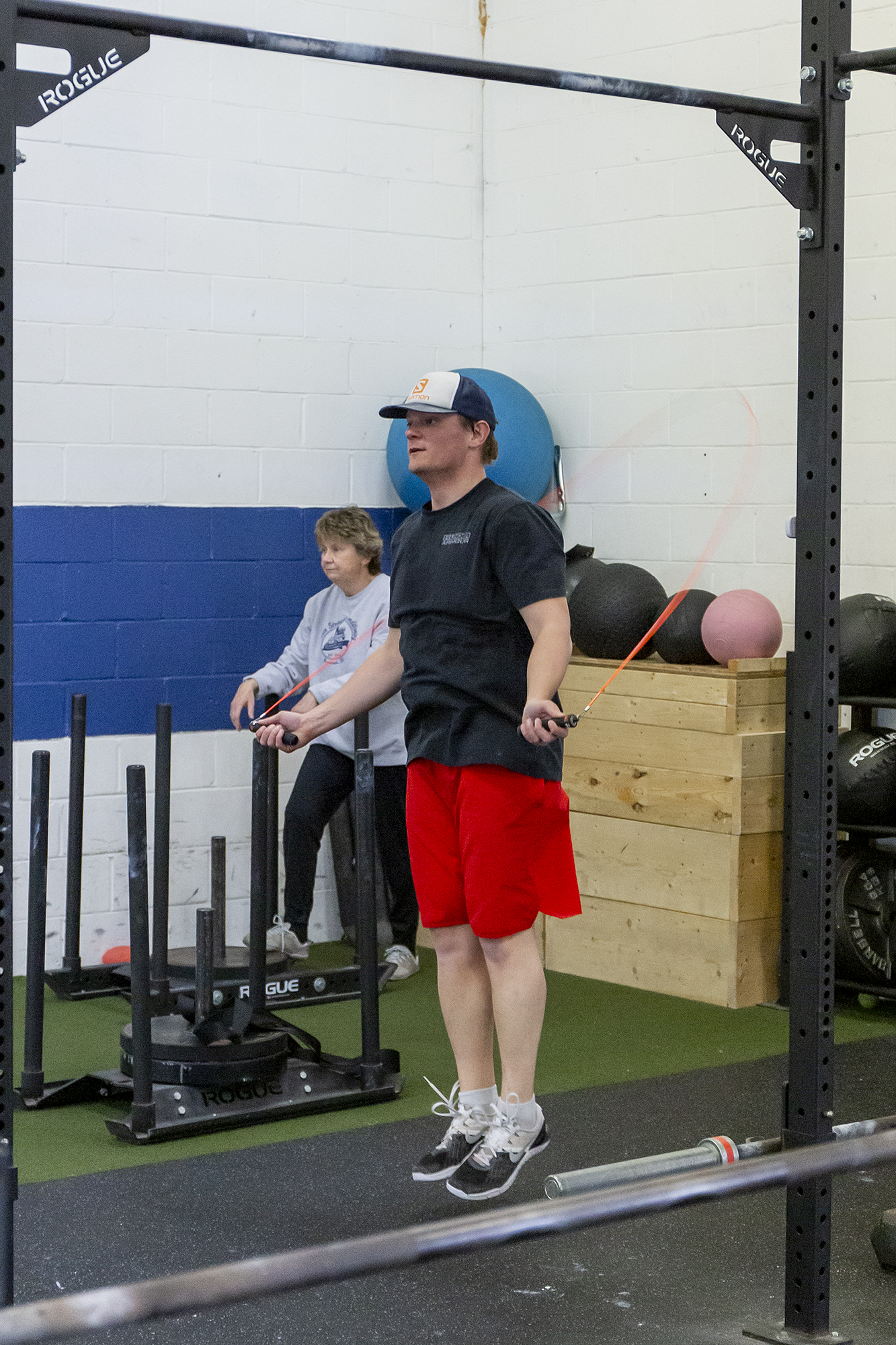
Snowballs
Are you struggling to come up with your new habit? Not sure what to choose from because 3 or 4 things need improvement? I urge you to focus on one. We’re bad at coming up with goals. We’re all overly ambitious and bite off more than we can chew. I want to avoid that in September by having you really dialed in on one habit, one goal.
When selecting your habit, choose one that will have snowball effects and maybe help other things as well. For example, if you want to drink less wine, a vague, hard to measure goal, why don’t you set a bed time or drink more water instead? You may drink less wine by focusing on winding down earlier and hitting the sheets consistently.
These snowball habits are the jackpot. Find habits that will bleed over into other things. That way, instead of juggling too many changes, you can focus on one and get a kickstart in some other areas. Above all else, keep it simple.
If you want more details, James Clear, my internet superhero, has a well detailed post about what he calls the Domino Effect.
Justin Miner
@portsmouthcoach

Hidden Benefit
We believe that strength and conditioning, consistently going to the gym and moving more are pathways to a better life. At the gym, you’re confronted with difficult situations and problems that you wouldn’t encounter outside. You face them in this controlled environment, which in turn, prepares you for situations when you need to test your limits, push your physicality or have a strong mental game.
Not convinced that AirBike sprints will help you in your next meeting, or the next time you need to do something that’s scary, like speak in front of people or share an idea of yours? What’s your self talk like before you perform that 500 meter sprint? You can apply the same mental game to tasks outside that you don’t really want to do. Making that difficult phone call, having a tough meeting with a coworker, whatever it is.
The biggest hidden benefit of all, confidence. Learning how to move, maybe initially being humbled by how poorly you move, and sharpening that skill over time, builds confidence like no other. What I’m trying to relay today is that it’s not just physical confidence, but mental confidence as well. Time in the gym can help you learn about yourself and teach you how to push limits and get better. Take on new challenges, try new things and learn how to really go for it. Don’t be mistaken that this is all physical.
Justin Miner
@portsmouthcoach

Start Small
We’re less than a week away from the start of September, and therefore, the start of our habit challenge. Start preparing now, because it does start on a Sunday. Traditionally, people hate starting challenges on Sunday, why not just push it back to Monday? Well, the Sunday start is nice because it forces you to complete your habit on a day that you would typically prioritize rest and recovery, not new habit starting. It’s a nice kickstart.
If you’re having a hard time coming up with your habit, I urge you to start small. Ambitious challenges are impressive, but usually skew our perspective to think that all worth while challenges must be big. Fortunately for us, that doesn’t need to be the case, you can start with a small, reachable challenge that will have a big impact as well. For a sports analogy, try hitting a few singles instead of always going for the home run.
The prove this point, I’m taking on a simple challenge for the month. I’ll be doing 30 push ups per day. Should be easy enough, but it’s an exercise I don’t like doing, which is why I’m bad at them and doing them consistently will certainly help change my mind about push ups. Something, like 2 minutes of a deep lunge stretch or 10 push ups or 30 bodyweight squats per day are all really good challenges for you to take on.
You habit doesn’t need to be grandiose. Instead of choosing something big and impressive and wishing that it happens, choose something simple and be impressive with your consistency.
Justin Miner
@portsmouthcoach

Never Miss Twice
High level achievers make mistakes just like everyone else. They're better at getting back on track though. When we miss a new habit we’re trying to develop, missing one day is no big deal. As James Clear says, “Rather than trying to be perfect, abandon your all-or-nothing mentality.”
As you start thinking about your September Habit Challenge, start planning for failure. Now, this isn’t expecting yourself to fail, but instead, being ready for all circumstances. You know what life things will get in the way you hitting your habit each day, start preparing for it now!
How are you going to handle a friend asking you out for breakfast when you need to get a 30 minute walk in first? What are you going to say to that friend who always gives you a hard time when watching what you eat? We can expect speed bumps like this to show up. To keep the streak and habit alive, we can start planning as to how we will bounce back.
It’s about being consistent, not perfect. You will miss a day. If the habit challenge is over for you after you miss a day, you’re missing the point. You need to get back on track the next day and back on the wagon. As Clear says, “Never miss a habit twice. Focus on building the identity of someone who never misses twice."
Justin Miner
@portsmouthcoach

Addition vs Subtraction
When learning new habits, focusing on adding new things, instead of avoidance, is much more effective. By focusing on addition, and being consistent, eventually some of the old habits you’d like to kick will take a backseat. You’ll be focused on your new habit that will snowball into other new habits that are good and eventually, push that old bad habit out.
Let’s say you want to start eating healthier. You proclaiming you’re no longer going to eat chips, drink wine, buy cheese or snack after dinner. The first couple days are tough, and you fight through. Then, on Thursday night, your friend offers you a glass of wine and you take it. It then becomes easier, since in your mind you’ve failed, to eat chips and snack on pop tarts and have donuts for breakfast. Since the streak is over, it’s all over, you’ve cracked the seal.
If we take the same scenario, but instead focus on addition, we can see a much different outcome. Let’s say you want to eat healthier. First, you decide that means more vegetables. You’re going to have a serving at every meal. First few days are difficult. But you get through it and accumulate small victories along the way. Fast forward to Friday night, a friend offers you a beer, you accept, with pleasure. You ate all 15 servings of your vegetables this week! The best part of this, even if you miss a serving of veggies, you have another meal, another opportunity to accomplish you task. So what if you missed, you get a lots of chances every day to hit it.
By adding new habits, we create smalls wins every time we check the box. It feels better than getting victory through deprivation. Then, when you want to back off and enjoy yourself, you feel good about what you’ve accomplish, so you’ve earned that beer. Opposed to feeling guilty for having a glass of wine because it was your habit to stay away from that stuff.
Subtraction can work to develop habits, but it’s challenging and not nearly as positive as adding something in. Remember, when we add something in, it has the potential to snowball and lead to other good habits and maybe, just maybe pushing some of those old bad habits out of the way.
Justin Miner
@portsmouthcoach
