
Welcome to the GAIN Blog
The blog is updated Monday-Friday. Tune in for posts and discussion about health, fitness, nutrition, training experiments and reflection. We share articles, videos and more. We post the link to our Instagram story every day, make sure to follow along there to never miss a post.
Don't Wait
I’m going to be your constant reminder this holiday season not to wait until the New Year.
Start now. Make small goals and start building momentum and discipline.
Nothing good happens by waiting until the New Year.
If you have stuff you want to do, get moving and don’t wait.
Justin Miner

Basics
Wow. What a hectic week it’s been. Whenever things go haywire, I try to take a look and see where I can simplify to create routines and habits that will keep me grounded. Since Elliot's arrival, my training and especially my running has been on the back burner. That’s okay, it’s what I expected to happen. However, I’m ready to get back into the groove, and I have a couple strategies I use to make sure that happens.
Basic workouts. Get in, get out. Honestly, most of my workouts over the past few years have been like that, but for the next month or two, I’ll pick two movements that I know I get a lot of bang for my buck and primarily just do those. Probably power cleans and deadlifts. They’re both full body exercises that will help me keep up my strength and explosiveness. Somedays, I’ll feel like doing more, and I will, but most of the time I’ll do one of those movements and move on. Setting my expectation that I’m not going to have a big crazy workout is really helpful for avoiding workout guilt.
For running, I set the bar low. I want to run twice a week. One day of intervals, which can be done on the treadmill even, and then I’ll get outside for a trail run once a week, at least. Setting the bar lower, and not expecting myself to run 3 or 4 times a week, or with a milage goal takes off all the pressure.
The holidays are always a hectic time of year, and I expect this year with the added stress of cancelled parties and no family gatherings only to be even more crazy. Make sure you have basics to fall back on to keep yourself training and moving, even when you don’t feel it like.
Justin Miner

Basic Squat Checklist
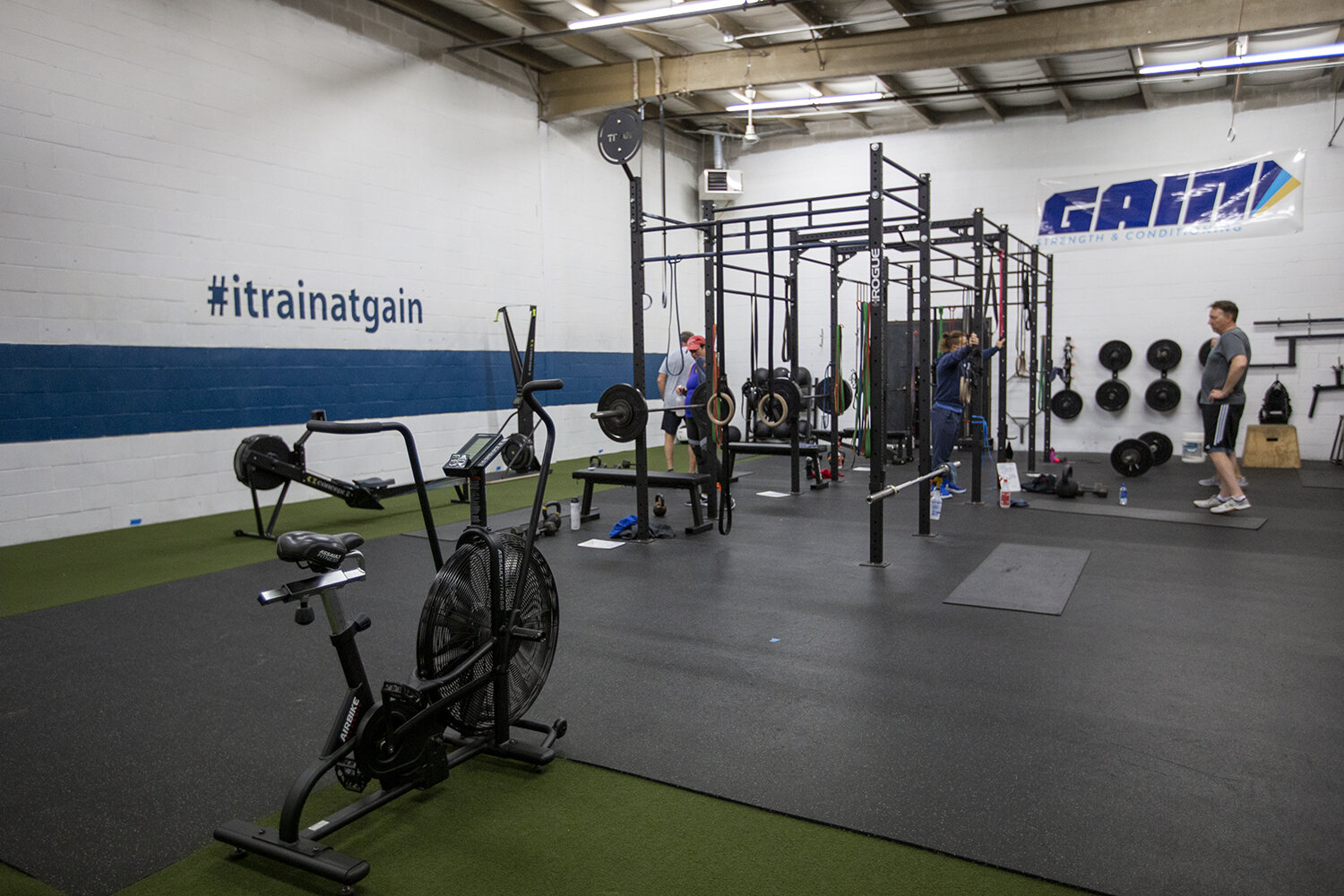
It always worth repeating squatting fundamentals. Check out this run down of common teaching points we like to use at Gain.
Get Organized!
Screw your feet “into” the ground by turning you heels towards one another. You can also imagine spinning your knee caps away from each other. When you do this, we’re trying to rotate the hips into the best position for range of motion and for force production.
Foot Pressure
After you get your hips organized, you might feel the weight on the outside of your feet. That means you’ve gone too far. Try to maintain a balanced foot - weight right in the middle of your heel and ball of your foot. At the gym, we say find your “mid foot.” This is initially difficult to do, but after a few reps it usually evens out.
Back THEN down
When learning to squat, it’s helpful to imagine the lowering portion as two pieces. Start by pushing your butt to a wall behind you. Once you start moving, let your sternum fall towards the floor. Once that happens, start bending your knees. This way, you’ve got the right trajectory to squat using your hips and putting less pressure on your lower back and knees. It’ll feel clunky at first, but as you learn the pattern, the two step movement will become more fluid.
On the Bottom
Maintain that foot pressure! No knees caving in, instead push them away from each other, like they’re magnets. To get up, start pushing that middle of the foot into the floor like you’re trying to break through it. Careful not to let your heels lift from the floor, if they do, lean forward more. If the opposite thing happens and all your weight is in your heels, you may feel like you’re going to fall over backwards. Keep your toes on the ground too.
Back on the Top
Maintain that knees out pressure as you come up. Once you get to the top, be sure you squeeze your butt to finish the movement, get full range of motion and set the next rep up for success.
Breathing
For squats we want to breath in going down, exhale as we’re coming up. We’ve talked before about a slight breath hold for added pressure and stability, but this is a basics primer. For the purpose of bodyweight squats, we want to inhale down, sharp exhale coming up. That’ll keep you in a good, smooth rhythm.
I hope one out of the many cues I just gave makes something click for you. We can always improve our fundamentals!
Justin Miner

Home Gym Gear Up
When we started looking to buy a house last fall, I had one request, a two car garage.
Not for cars, but so I had plenty of space to build out my home gym.
As a self-identified gym rat, this was an important and necessary part of a complete home. I wanted a space to train, think and tinker. Little did I know only after a few months of having my home gym, would I be restricted to only use that since the Gain was closed. It turned out to be nice that we had the full set up accessible to use during the lockdown.
I have everything in my home gym. Squat rack, spin bike, multiple barbells, heavy dumbbells, really heavy dumbbells, all the bands and a variety of kettlebells.
As we head into the winter, many of you are thinking about creating a gym or a space to get your fitness on. If the lockdown taught us anything, it’s that we should have some space and equipment to train at home when we need to. Here’s what you should think about adding to your home gym set up.
You don’t need as many weights as you think. Kettlebell, or dumbbell, doesn’t matter. They both have their own advantages.
You should think about getting one heavy one, and one lighter one.
The heavy one should be a task to move. You shouldn’t want to carry it up and down stairs, but you could if you need to. You’ll use that heavier weight for deadlifts, swings, carries and maybe even squats. The lighter weight should be one you can easily carry around can be used for higher rep squats, single leg movements like lunges, split squats and SLDLs and upper body pushing and pulling movements like floor presses, overhead presses and rowing.
If you had two weights like that, I think you could do everything you need to do to have a sound strength and conditioning program. Would more weights allow you more variety? Sure, but it could still be effective with just that.
If I were to add one more thing, I would get a piece of conditioning equipment.
At home, I have a Concept II Bike Erg. It’s fancy, but doesn’t have the unnecessary bells and whistles like a big screen and I can’t tune into a live classes with it.
A spin bike like that, or an Air Bike or even a rower is perfect for your home gym. They’re all simple machines that can pack a punch of effectiveness so long as you can get yourself on it.
Don’t get lured into thinking you need a bike or rower that has live stream classes. It’s great in theory, but I’ve yet to meet a person who’s Peloton changed their life. Training at home is hard, a technology isn’t your magic fix. Stick with simple and get used to motivating yourself to use it.
Justin Miner
Shoe Clean Out
We’ve noticed a lot of shoes collecting cobwebs. Literally. Don’t worry, I will not donate your shoes if you have been using them recently. The ones that go unused are quite obvious.
if you think you may have and old pair of shoes here, please grab them by Wednesday at 1pm. After that, the box will be headed to a donation bin.
Thanks!
Justin
PS - I’m really good at knowing who’s shoes are who’s.

Bask in Discomfort
The gym has the ability for you to experience discomfort, and lean into it.
Learning to be comfortable when you’re uncomfortable, is a life skill worth developing.
The next time you’re doing rowing intervals or a high rep medicine ball finisher, instead of hoping for it to be over, lean into the discomfort. Bask in it and know that at the end of the workout, not only will you be okay, but you’ll be better off because of it.
Justin Miner

Force Absorbers
As Elliot gains a better understand how of to move his limbs through space, I can’t stop marveling at the fact that he can absorb force so well.
What I mean is that if I push on his leg, it doesn’t just fold into his body. He knows how to push back on it. How to absorb the force input.
It’s impressive that they can do this already. Absorbing (and creating) force is a lot of what we do in the gym.
Can you squat with control on the way down, or do you flop into the bottom? Remember the first time you box squatted? Did you crash into the box with an inelegant landing? Push ups are about controlling on the way down, then producing force in an opposite direction to get up.
If we’re born with this ability, to create and absorb force, how can we possibly lose it when we become adults? From not using it, of course!
We’re born to move, create and absorb force. Training in the gym gives us a practical way to make sure we keep these simple human functions that we were all born with, and that we knew how to do before we were even aware of it.
Justin MIner
Small Tweaks
When it comes to small, manageable goals, I’m much better at giving advice than taking my own.
When I was at Elliot’s doctors appointment yesterday though, I got on the scale and realized I needed to take my own advice and make some small tweaks to my everyday habits.
Since Elliot’s arrival, 8 weeks ago, I’ve ran only once. While my training load dropped significantly, my eating habits stayed the same.
Instead of taking a complete 180 and trying to forcefully overhaul everything at once, I identified a few key tweaks that I can make that will make all the difference for me. This removes the added stress of dieting, or making too many significant changes while I try to run a business during a pandemic and take care of an infant.
Here are my 3 small tweaks:
Skip breakfast more regularly.
Since 2012 I’ve been intermittent fasting. When the pandemic hit, and I found myself at home everyday, I started eating breakfast with Hannah most mornings. While this was fine and good, eliminating this meal will reduce total caloric intake and I know I can handle fasting well, since I had done it so long.
Limit peanut butter consumption.
When I’m training really hard, I can get away with putting away a half a jar of PB in one sitting. With a reduced training load, I can’t get away with this so easily anymore. Peanut butter is highly caloric, and delicious, so it can really ramp up daily intake.
Lastly, I’m going to limit my beer consumption to the weekends. I’m not always a big beer drinker, but I’ve been in a phase lately where I’m having one most nights. This simple reduction will have a big pay off.
So why am I doing all of this? To show that small habits can make or break your goals. I’m not restricting anything I’m going to eat. I won’t be tracking anything. I’m getting back to the simple things that have worked for me in the past so I can get down to my normal fighting weight. If I didn’t just have a baby, I probably wouldn’t have been concerned with this at all, but I have this new found motivation to be as healthy as I possible can. I want to set a good example and be sure that I’m ready to kick ass for a long time.
If you’re looking to make some changes, I urge you to identify a couple of very small things that can have a large payoff.
Justin Miner
Thanksgiving Hours
We will be closed on Thursday 11/26 and will open with a limited schedule on Friday 11/27 with classes at 7:30am, 9:00am, 10:30am and 12:00pm.
If you are staying away for a couple days or a week, be sure to let your assigned coach from Truecoach know your plans. We’re happy to modify your workouts for the week so you can still train, even if you can’t make it in.
Justin Miner

Dear Peloton Buyer...
Dear Potential Peloton Buyer,
It’s getting close to that time of year that we all drink a bit too much and indulge in too much dessert. It’s a time for reflection and planning ahead. Maybe you’re thinking you’ve let you physical fitness slip a bit. Maybe 2020 threw you a curve ball and in 2021 you’re getting back in action and taking charge. All you, or your loved one, needs to be the best you can be, a Peloton.
I hear you. The appeal is there. Hundreds of instructors and thousands workouts to choose from. Cool bike. Big screen. Train in your own space. What’s not to love?
While the performers provide engaging, fun sessions on the bike, it’s a hard tool to stick with for a long time. To be frank, It’s not the answer.
In order to get more fit, you need to adapt to a stress. The specific stress creates some change and you improve. That’s fitness in a nutshell. But the fitness practices that have a knack for creating long-term converts, like yoga, running, (real) cycling, of course, strength and conditioning, all have another critical component of fitness. Skill.
During the activities mentioned above, and even all types of sports like tennis and golf you can improve through adaptation in response to the stress, but you also get better at just doing the thing. The movements become more fluid, more natural, more refined. The environment provides different kinds of feedback so you can adjust and tinker all while gaining a better understanding.
The only feedback you get from the bike are metrics. Create stress, adapt to the stress, improve and move on. Totally. But with a Peloton, the skill component and the different types of feedback aren’t there. The only thing to chase are those metrics. Beating previous records get exponentially more challenging. Ask anyone who’s been lifting for more than a few years. It gets harder and harder to add weight on the bar, but the refinement of skill, and practice in complimentary movements keeps you engaged and coming back.
Every time you squat a kettlebell in the gym, you can do it a little bit better. You can get feedback from a coach, you’ll try harder than you would training alone, and you can focus on feeling smooth and being engaged. As your skill improves, your awareness improves and you can get better at squatting without grabbing a heavier kettlebell. As you get better at squatting it translates to other movements in the gym. You’ll notice it throughout the day and in all sorts of tasks that life will throw at you. Your form improves, along with your strength.
Can you imagine having to do more every single time you come to the gym? It would be impossible after that initial spike of gains. But in the gym, skill gets refined through repetition, through practice, through feedback and through long-term commitment.
It’s always there in the gym, but never on the Peloton. There’s no feedback to tighten up your pedal stoke week to week. The only goal on the bike is to ride faster, ride harder, burn more calories or go longer. After the initial stress adaption, you’ll burn out. You’ll get sick of not breaking your records, and you’ll need to keep riding longer and longer for that same sense of accomplishment. That’s where the cliche about at-home exercise equipment become a clothes rack comes from.
The new fitness technology only has the ability to focus on the half of the fitness equation, adaptation. Their worldview is that more is the only way to get better. The reason gyms, yoga studios and all kinds of sports aren’t going anywhere, we get the skill aspect. The second half of the equation and the secret sauce to long-term commitment. That, along with the side dishes of community, connection and commitment that are drastically missing from these new age at home options.
While I understand your desire to get a Peloton, it’s not the answer. It’s not what you need. This holiday season, instead of giving big bucks to a big corporation that actually doesn’t care about your health, I urge you to give your three thousand dollars to a real, local gym, with real coaches who know how to make a real impact in the long run.
Sincerely,
Justin

Archaic
I recently found myself shuffling around to many doctors. I was establishing care and getting caught up before the arrival of Elliot.
At one of the offices, I was having a difficult time explaining my exercise routine and summed it up as I lift a lot of weights and run really far. While vague, it’s an accurate summation.
The doctor’s first response to my mention of lifting weights was a concern that I wasn’t taking steroids.
Seriously? What an archaic viewpoint that all persons who lift weights must also be into steroids.
Doesn’t he know that gyms everywhere host mass numbers of normal, average people who lift weights for the countless health and longevity benefits?
Not long ago gyms were reserved for muscle headed bodybuilders looking to create freakish builds.
Today though, gyms are home to more grandmothers than bodybuilders. The science is in and hitting the weight room pays huge dividends for a confident, healthy life.
I hope he gets a chance to experience the impact strength and conditioning can have on people. Maybe then they’ll move on from their outdated perspective.
Justin Miner

Gradual
Excellence is the gradual result of always striving to do better. - Pat Riley
I saw this quote today when logging on to Truecoach. What a representative quote of what we’re trying to do in the gym.
The searching for a quick fix crowd always bounces from one thing to the next looking for the answer. Those who are committed, who get the long game, know it’s a gradual game of getting a little bit better over a long period of time.
If you look around and it seems like nothing is working, have you taken a look at your consistency? At your commitment to continue getting better. If not, that’s a good place to get started.
Justin Miner

Strength Training to Relieve Anxiety
With the craziness of 2020, I have some good news to report to you. A new study just found that strength training can help relieve anxiety.
This new study found that strength training, specifically squats, bench press, deadlifts, lunges and rows, helps relieve anxiety in young adults. A lot of this research has been focused on aerobic activities like running and swimming, but this one looks specifically at free-weight resistance training, or as we call it in the real world, strength training.
The best part, they only trained twice a week for 8 weeks. All the repetitions for the exercises were within 8-12 reps. All the participants were even taught good form for 3 weeks leading into the study. Just a little bit, consistently, can make all the difference.
If you needed a little extra pushy to get to the gym this week, you’re welcome!
Justin Miner
Get Outside
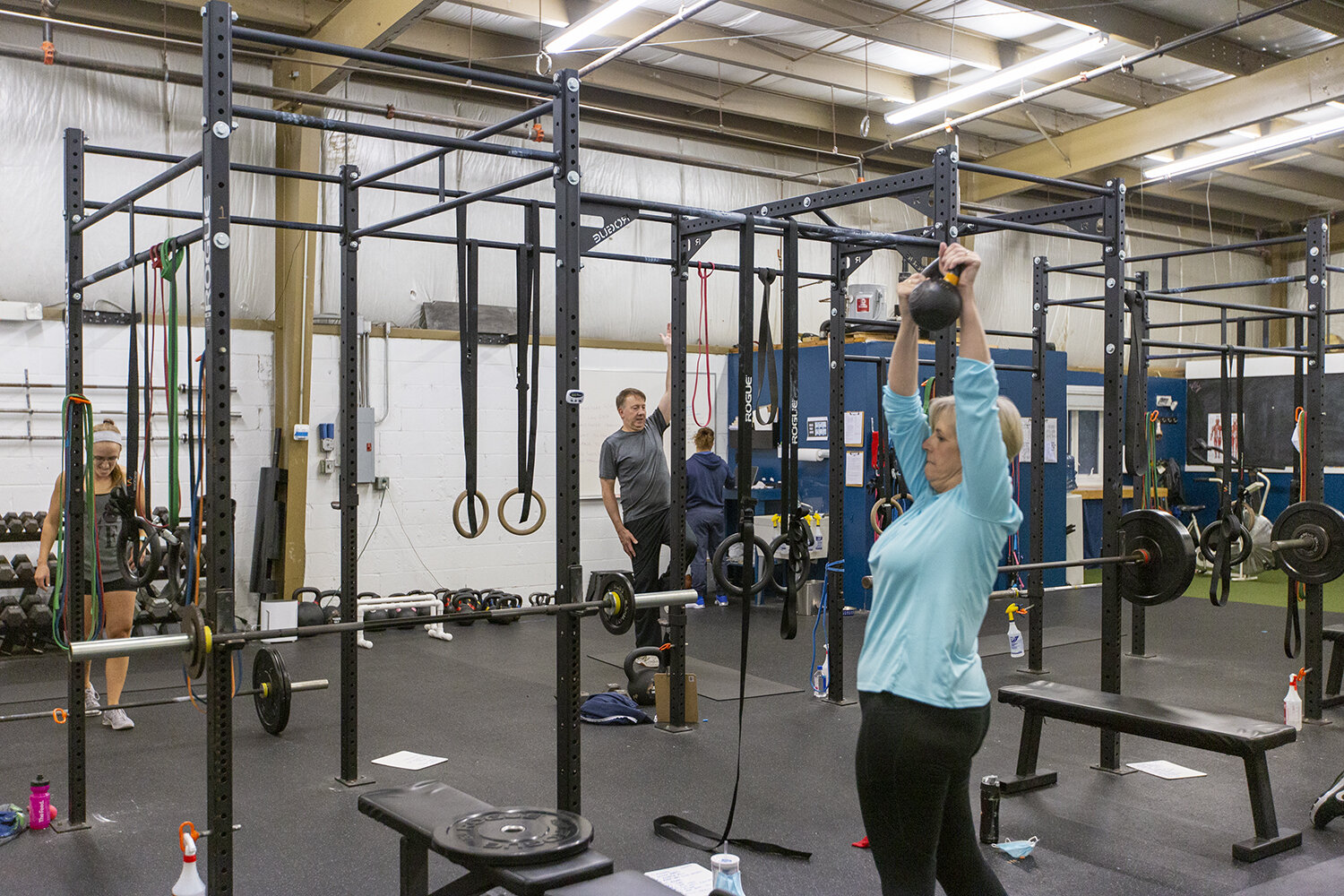
Warm weather this weekend. Take advantage and get yourself outside for a long walk or hike.
I harp on it all the time. You need to walk more!
It some of the most simple, most accessible exercise around. Take advantage of this weather and get out there.
Justin
Running Analysis
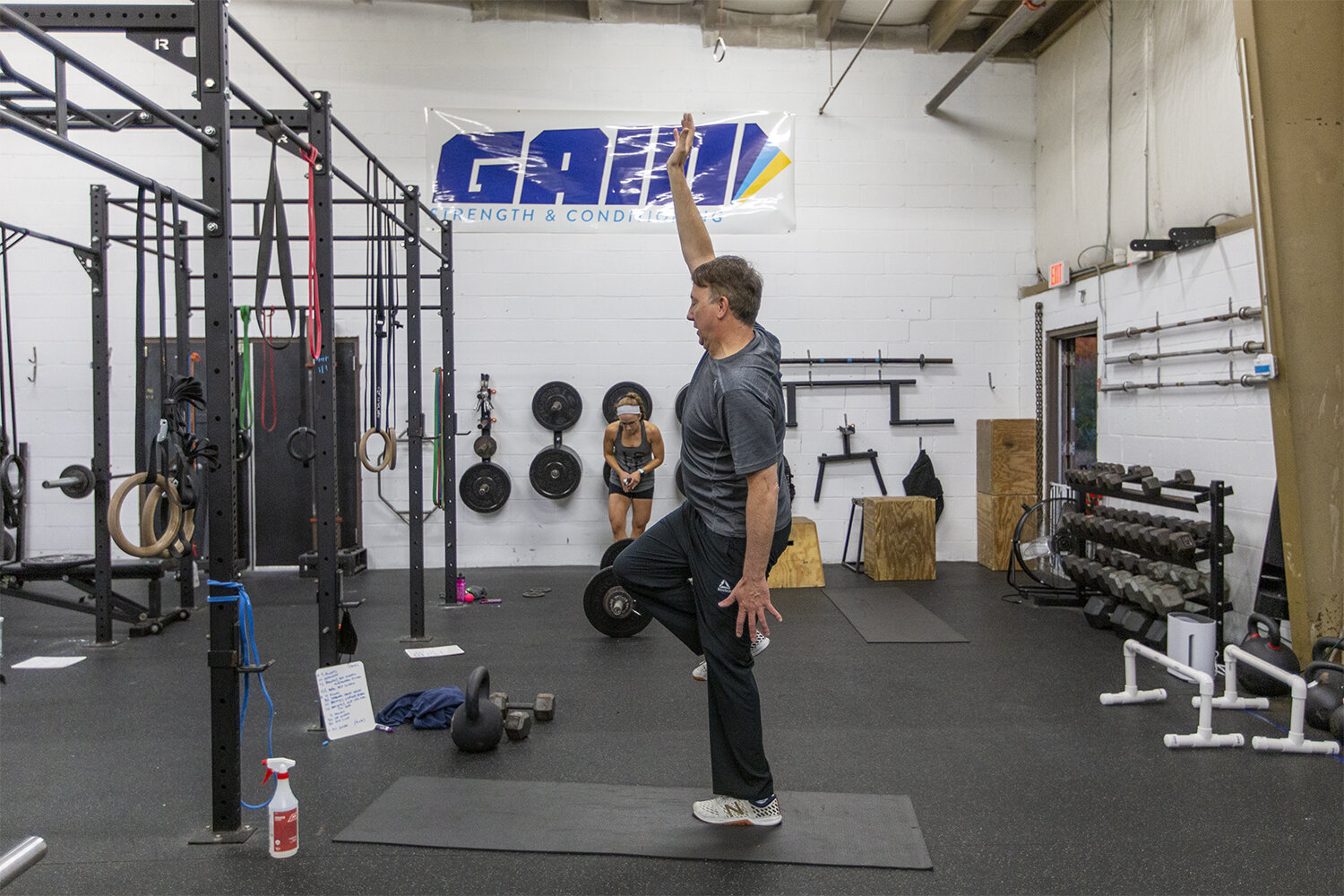
It’s a little known fact that we offer running technique sessions.
See, I fell into running backwards.
I started doing it because I appreciated the biomechanics of it, understanding it as locomotion and how technique can drive efficiency and performance. Because of that, I’ve developed an eye, and an ability to coach others through various running skills and drills, including the self-propelled treadmill that helped give me an understand of how to run smoothly and pain free.
This 60 minute session is a perfect way to create an awareness of how you’re running and how you could go further, faster and with less pain just by some simple technique tweaks. When combined with a solid strength and conditioning plan, this will level up your running for sure.
If you’d like to see what it’s all about, or even gift a session to a friend or family member, you can book using the link below.
CLICK TO PURCHASE RUNNING ANALYSIS WITH JUSTIN
Justin Miner
Six
November 4th is a special day for me, and for Gain.
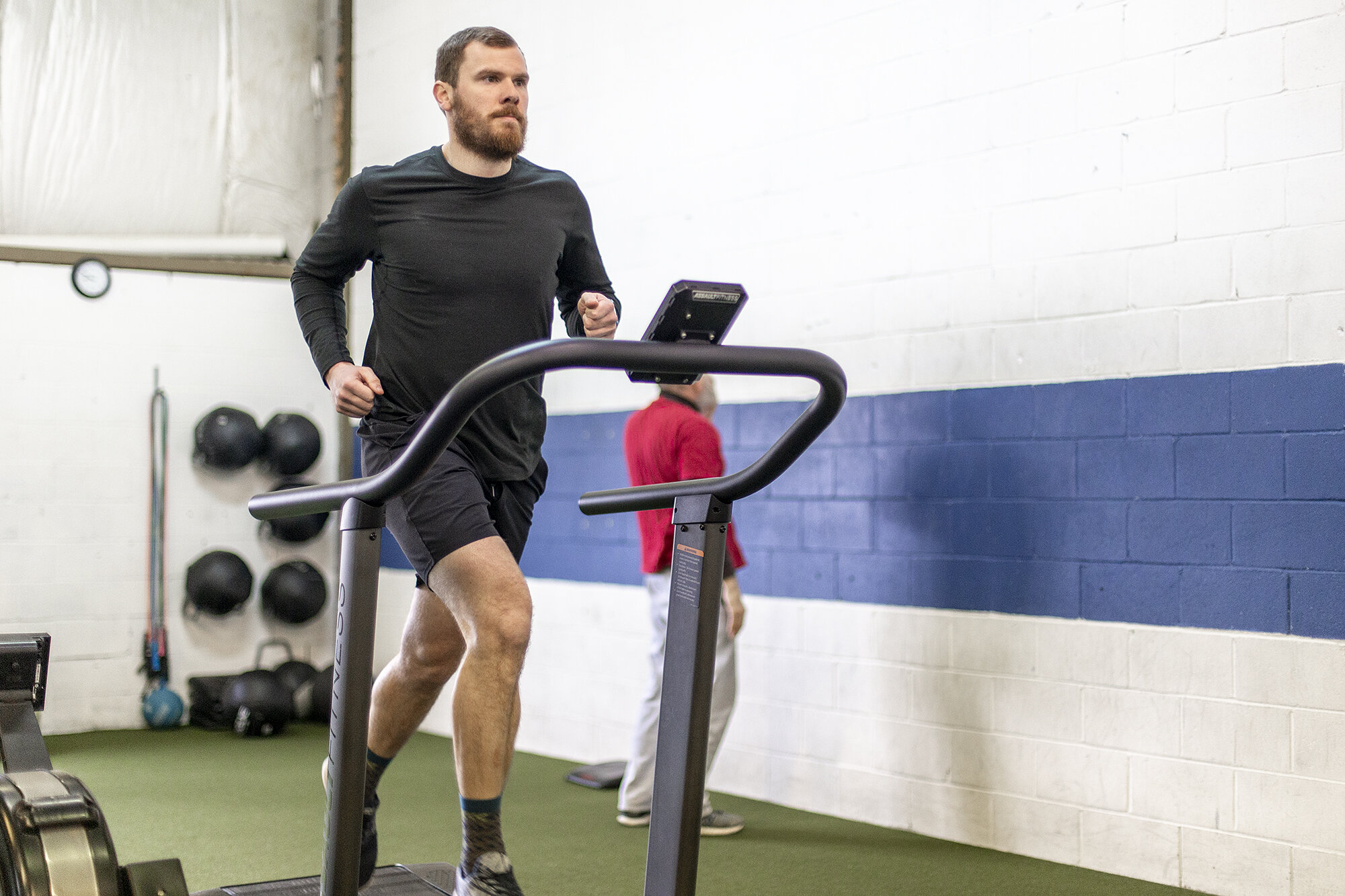
It was this day six years ago that I got the keys and started my commercial lease on the warehouse we now call the gym.
Things have changed, a lot.
The layout, the equipment, the programing, the warm ups and the conditioning. Anyone remember the battle ropes? Or those first Airdyne bikes with the terrible seats? It all started with a commitment to provide world-class strength and conditioning, typically reserved for athletes, for everyone. That’s what we’re still committed to today.
What hasn’t changed is the people. The communal commitment to get better. Everyone that comes here has different goals and different lifestyles, but they’re all united in a commitment to better themselves, to improve their life outside of the gym.
In the world today, we need a place we can challenge ourselves, test the limits and push further than we thought possible. That’s what I wanted to create all those years ago and that’s what Gain has become. Thanks for enjoying the ride with me, I couldn’t have done it without you.
Justin Miner

my first mock-up of Gain. Back in Oct 2014.
Why Do My Fingers Hurt?
Among the many things I’ve learned through my time in the weight room is how to listen to my body. How to notice subtle changes or sensations that I otherwise might not be paying close enough attention to without a consistent physical practice.
Last week, I couldn’t stop cracking my knuckles on my right hand. The joints felt swollen and sore whenever I would grab something. It didn’t hurt but it was frustrating. I kept thinking, what did I do?
It wasn’t anything in the gym, since I didn’t workout last week until Friday. And when I did, squeezing a barbell didn’t have any negative effects. It wasn’t until later that night that I had the realization of what it’s from.
Loading my wood stove. My fingers aren’t conditioned to grabbing heavy logs by the end and tossing them in the wood stove. We’ve only been running it regularly for a few weeks now.
I know this isn’t some riveting fitness insight, but the gym taught me to pay attention to how things feel, to notice new sensations and to be critical about how my body feels. I hope you’re developing the same awareness around how you move and feel as you go throughout your day.
Justin Miner
You Don't Need Motivation, You Need to Think Further Down the Line
Motivation is a finicky thing.
We want motivation to carry us towards our goals, whatever they may be.
I want to flip that perspective around on you today.
Instead, consider that long term goals keep you going when there is no motivation left in the motivation jar.
Here’s an easy example. I want to live to be 100 years old. And not just get there, but thrive there. If I had to boil that goal down even further and be even more vague, I want to live a long, healthy and capable life.
So whenever I’m feeling unmotivated to train, or run, or lift heavy stuff, I remember that long-term goal, the point of all of it: to feel good and stay healthy for my whole life.
More often that not, this gets me to do something. Maybe it’s just 100 bodyweight squats, or 5 sets of 5 goblet squats with a light kettlebell or a couple of push ups. With the clear view of my long term goal, it helps me do something, just something, even if it doesn't necessarily push me closer to short-term goals like running a 100 mile race or deadlifting 500 pounds.
It’s the time of year more and more people start feeling unmotivated.
Just remember, it’s okay to not always be chasing short-term goals. You’ll have unproductive workouts in the short term. But if you’re able to zoom out, and consider your bigger, broader goals, all the training, all the workouts, all the food choices are productive.
Have a clear path you’re on. If you don’t know where to start, consider where you want to be when you’re 100.
Justin Miner

Selective Ignorance
As I like to do on Friday, I’ve stolen today’s blog from James Clear’s newsletter.
Be selectively ignorant.
Ignore topics that drain you.
Unfollow people that drain your energy.
Abandon projects that drains your time.
Do not keep up with it all. The more selectively ignorant you become, the more broadly knowledgeable you can be.
It’s been over a month since deleting my personal Instagram account, and I can tell you, selectively deciding to ignore everything I was seeing on there has turned out to be a great decision. I waste less time, get less emotionally involved in things that don’t actually matter to me, and have more time for what matters.
Justin Miner
How to Progress (without weights)
A friend asked me a really good question recently. So good in fact, after I typed up my answer to him I have decided to post it instead of messaging him back.
He asked:
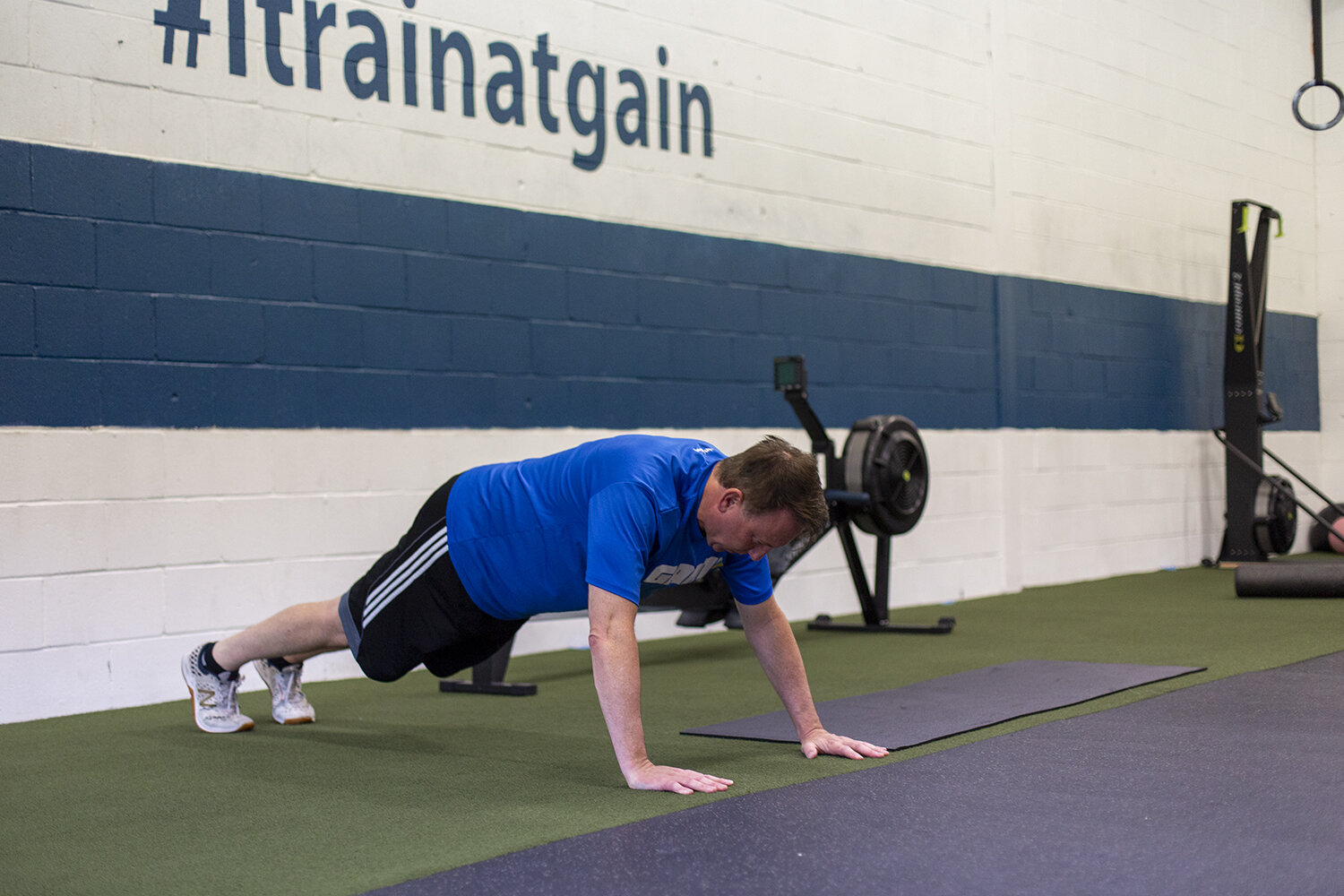
"If I did workouts only doing push ups and squats, is there any sort of progression I could do weekly or daily?"
Now, this friend knows his way around the gym and is a veteran lifter. To clarify, you’re a veteran if you’ve been in the game for at least 10 years. I’m telling you that to relay the fact that he understands progress, and how it works in the gym. We add more weight over time and therefore become stronger. Progress in the weight room is easy, do more weight over time.
But to address his question, how do we make progress when only working with our own bodyweight? Can we still get stronger and improve if there’s no weight to add to a bar? Can we even progress?
My text back:
We just need to be strategic about the variables we’re manipulating. Specifically, to get better at bodyweight movements, we’re going to focus on increasing volume, or total reps, and time under tension, which we’ll do by way of tempo movements.
So let’s say you’re going to do push ups and squats 4 times per week.
I would set this up so that we would change focus on the variables every 2 weeks. This would add variety, keep it fresh, and really allow us to notice the progress.
Week 1
Every training day for week 1 you’re going to hit 50 total reps of both squats and push ups. Break it up however you need to. The first couple days might take a lot of sets and hopefully by the end of the week you’re getting it done in less time with fewer sets.
Week 2
Easy progress this week. Add 10 reps to each movement and complete them on all 4 days again.
Week 3
Now, if we were to add 10 reps every week, you would probably make some progress but only in the short term. At some point, the benefit will wear off, the workouts will take too long and you could risk overuse injuries. So this week we’re shifting gears and are going to make the movements harder by going slower, or with a controlled tempo. This way, we increase the challenge to our muscles by making them be “on” longer than they were if you just did the reps. More time under tension means more adaptation for the muscles and more results for you.
This week we’ll do only 30 total reps per workout, but for the squats you’re going to lower for 3 seconds and pause for 3 seconds on the bottom before exploding up. Same for the push ups.
Week 4
So this week, we’ll keep the reps at 30, but slow you down even further. Squats will be 5 seconds lowering and 3 seconds pausing. Push ups will be 5 seconds lowering with a 3 second pause as well.
Week 5
Now you’ll start to see the pattern. This week we get back to increasing the volume. Your body is ready for it after two lower volume (but higher stress) weeks of training. Let’s get back to adding 10 reps and start this week at 70.
Week 6
You guessed it, 80 reps of both. More volume, more training stimulus, more progress.
Week 7
Back to tempo. This time, we can increase two things at once. We can bump up the volume from our last tempo week, and we can slow the tempo down. Double progress!
35 reps of each movement with a 6 second lower and 4 second pause.
Week 8
35 reps with 6 second lower and 6 second pause on the bottom.
By progressing this way, we’re ensuring you never hit the dreaded plateau. Alternating by increasing the challenge by way to tempo and volume let’s the body properly recover and prevents you from trying to do too much too soon. Without extra weight to add on, volume and tempo and the best way to keep these simple movements challenging and ensure that you’ll actually build some strength without weights at all.
Justin Miner
